 Cancun Mexico Snorkeling
MUSA Underwater Museum Cancun Snorkeling: Honest Guide
This guide covers MUSA underwater museum Cancun snorkeling end to end: what the museum is, what snorkelers actually see from the surface, which bookable trips reach the statues, and what each costs. The headline fact holds it together: more than 470 submerged sculptures stand on the seabed between Cancun and Isla Mujeres, with fish living in them. The figures come from the full Cancun snorkel tour comparison.
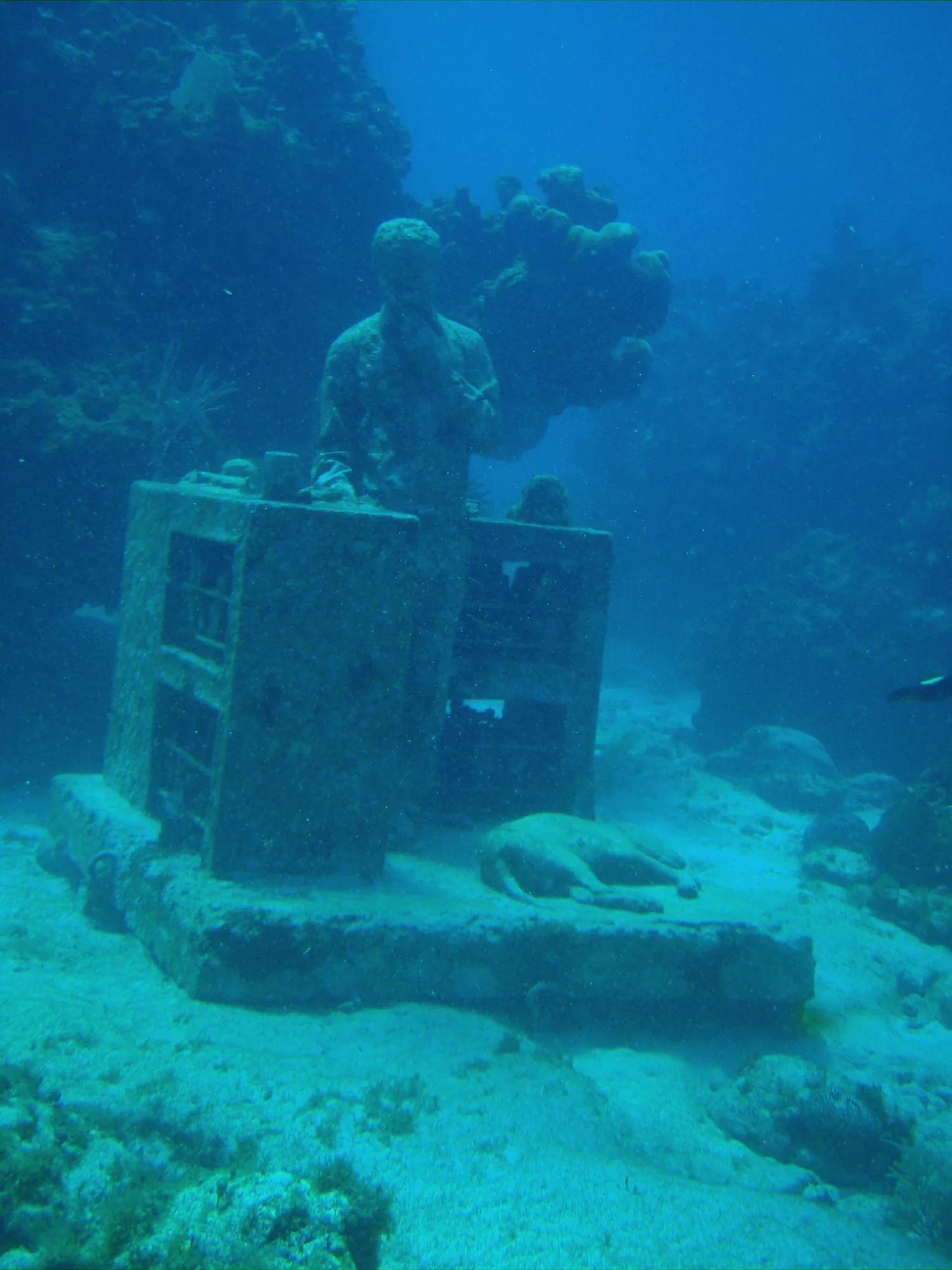
The Dream Collector on Manchones reef. Photo: Andy Blackledge from Scottsdale, AZ, USA (CC BY 2.0) via Wikimedia Commons
Quick answer Two bookable snorkel trips reach MUSA, from $70, one leaving from Isla Mujeres itself
Yes, you can snorkel MUSA. Snorkelers visit the shallow galleries and see the statues from the surface, while divers go to the deeper sections. Two bookable trips in our comparison include the museum: a three-spot Isla Mujeres run at $70 per person for 3 hours 30 minutes, which pairs the museum with the El Farito and Manchones reefs and includes marine park taxes and entrance fees, and a five-stop boat run at $99 per person for three hours from the Hotel Zone that adds El Meco reef, a turtle spot, a shipwreck and an underwater cenote. The museum-first trip departs from central Isla Mujeres, so you take the ferry across or build it into an island day. Sunscreen is banned before entering the water and the reef waters sit inside national park territory administered by CONANP.
Key takeaways
- The museum-first option is the three-spot MUSA snorkel at $70, 3 hours 30 minutes, three stops of about an hour each, departing from Senor Frog's on Isla Mujeres with park fees included and a 4.6 rating from 54 reviews.
- The broader option is the Reef & MUSA boat snorkel at $99, which packs five stops into three hours from the Hotel Zone and holds 4.6 from 41 reviews.
- For the wider picture on boats, reefs and prices, see the full Cancun snorkel tour comparison.
- Pair the timing with the water: the snorkeling spots guide maps every reef a Cancun trip can reach.
What the MUSA Underwater Museum Actually Is
MUSA stands for Museo Subacuatico de Arte. It sits in the waters between Cancun and Isla Mujeres and holds more than 470 submerged sculptures. The museum was founded as an artificial reef, with a specific conservation purpose: to draw visitors away from the natural reefs nearby, which were degrading under heavy visitor pressure. Every statue you swim over exists partly so that the living reef does not have to absorb every fin kick in the region.
The sculptures are the work of Jason deCaires Taylor and Mexican artists. They are made from marine-friendly material, and holes in the pieces let marine life colonise them. That is why the statues change over time. A gallery that was bare concrete a few years ago can now carry a crust of coral, algae and resident fish. The museum's own site, musamexico.org, describes the project and its galleries.
The sculptures sit at different depths. Some galleries rest shallow enough for a snorkeler, floating at the surface with a mask on, to see them clearly. Others sit deeper, and those belong to divers. That split by depth is the single most useful thing to understand before you book, and we deal with it honestly in its own section below. When you read a listing that promises MUSA, check that it actually stops at the galleries rather than merely passing through the bay, because the museum sits in water that several other tours cross without pausing.
Why an artificial reef
The point of MUSA was always redirection. Cancun's natural reefs were taking the full weight of the region's water tourism. By placing hundreds of sculptures on sandy bottom where no reef existed, the museum gave boats, snorkelers and divers somewhere else to go, and gave coral and fish new structure to settle on. It is one of the clearest examples anywhere of tourism infrastructure built specifically to relieve pressure on a natural site.
The reef waters here are national park territory administered by CONANP, Mexico's national protected areas commission. That status is not decoration. It is why rules such as the sunscreen ban are enforced at the boat rather than suggested on a sign, and it is why marine park entrance fees exist on these routes at all. The museum-first trip on this page folds those taxes and fees into its $70 ticket, which means you are paying the park's share up front rather than at a dock window.
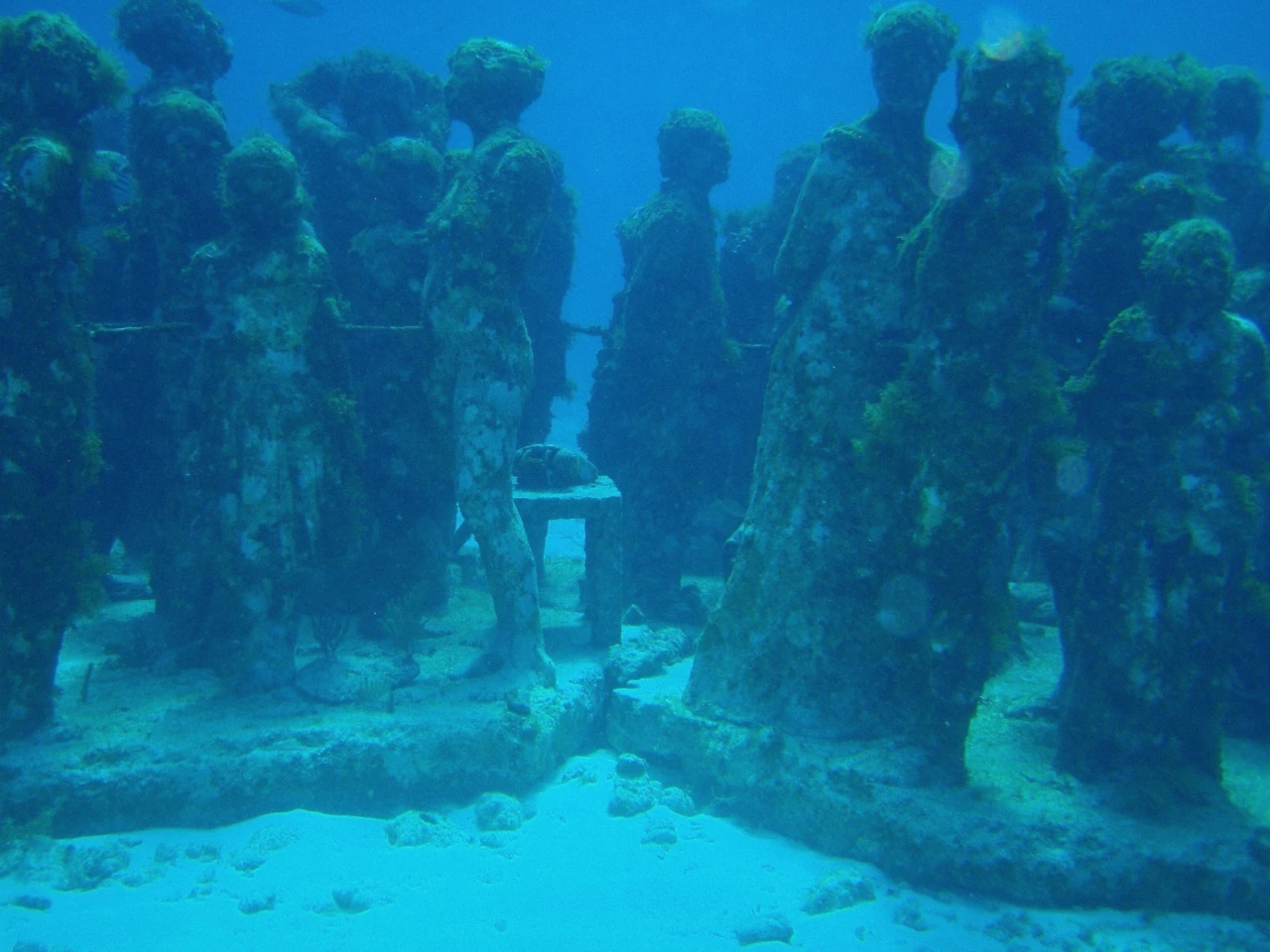
Snorkelers over the galleries at MUSA. Photo: Andy Blackledge from Scottsdale, AZ, USA (CC BY 2.0) via Wikimedia Commons
Snorkeling MUSA vs Diving It: What You Actually See
This is the honest part most marketing skips. MUSA is not one experience. It is two, split by depth.
Snorkelers stay at the surface. You wear a mask and a life vest, you float, and you look down at the shallow galleries. The figures on the Manchones side of the museum sit close enough to the surface that you can make out shapes, see fish moving between them and watch how the statues have been colonised. Visibility on a calm day is good enough for this to be genuinely rewarding. What you cannot do from the surface is study detail, look up at a sculpture from below, or reach the deeper installations. That is the trade, and no listing removes it.
Divers go deeper. With a tank and a guide they can descend among the sculptures, circle them and see the galleries that sit beyond snorkeling range. If seeing every installation matters to you, diving is the format that delivers it, and no snorkel trip in our comparison changes that. If floating over figures with fish in clear water is enough, snorkeling delivers that at a fraction of the cost and with no certification needed.
Both bookable trips on this page are snorkel trips. The three-spot MUSA snorkel gives the museum about an hour of guided swimming alongside El Farito and Manchones, so the statues are a major part of the day without being the only part. The Reef & MUSA boat snorkel treats the museum as one of five stops on a three-hour run. Neither requires dive training. Both require basic comfort in open water, because you swim from the boat and back to it.
The Snorkel Tours That Reach MUSA: Prices and Formats
Two listings in our comparison include the museum on a snorkeling route. They suit different travellers, and the practical difference starts on land, because one leaves from Isla Mujeres and the other from the Hotel Zone.
The museum-first trip costs $70 per person and lasts 3 hours 30 minutes. It is a three-stop run: El Farito, the lighthouse reef on the bay side of Isla Mujeres, then Manchones reef, then the MUSA galleries, with about an hour of guided swimming at each. It departs from central Isla Mujeres, meeting at Senor Frog's, a short walk to the boat. Full snorkeling gear and bottled water are included, and marine park taxes and entrance fees are folded into the price with no hidden charges. Guides are certified and bilingual in English and Spanish, and there is a private group option if you want the boat to yourselves. It carries a 4.6 rating from 54 reviews.
The five-stop boat run costs $99 per person and lasts three hours from the Hotel Zone. MUSA is one stop among five: El Meco reef, the statue galleries, a resident turtle spot, a shipwreck on white sand and an underwater cenote. It also holds 4.6, across 41 verified reviews.
If you want every number in the comparison side by side, see the Cancun snorkeling tours compared side by side. The figures that matter for the museum itself are these:
Both MUSA snorkel formats at a glance
| Detail | Museum-first three-spot snorkel | Reef & MUSA boat snorkel |
|---|---|---|
| Price per person | $70 | $99 |
| Duration | 3 hours 30 minutes | 3 hours |
| Stops | El Farito, Manchones reef and MUSA, about an hour each | One of five stops |
| Other stops | El Farito lighthouse reef, Manchones reef | El Meco reef, turtle spot, shipwreck, underwater cenote |
| Rating | 4.6 from 54 reviews | 4.6 from 41 reviews |
| Departure | Central Isla Mujeres, meeting at Senor Frog's | Hotel Zone office |
| Park fees | Marine park taxes and entrance fees included | Not stated |
| Guides | Certified bilingual guide, English and Spanish | Not stated |
| Private option | Available | Not stated |
| Gear and drinks | Full snorkeling gear and bottled water included | Gear included |
| Cancellation | Free up to 24 hours before, reserve now pay later | Free up to 24 hours before |
Which one to pick
Pick the $70 three-spot trip if the statues are the heart of your day and you like the idea of pairing them with two proper reef swims. An hour at each of three spots is a slower rhythm than five stops in three hours, the park fees are settled before you board, and the private option makes it work for families or small groups who do not want company. The ferry to Isla Mujeres is part of the plan, and some travellers will count that a feature rather than a cost.
Pick the $99 five-stop run if you are based in the Hotel Zone and want a fuller morning without a ferry crossing. You trade some museum focus for a turtle spot, a shipwreck, a shallow beginner-friendly reef and a surface cenote. Both trips carry the same 4.6 rating, so the rating does not split them. The route and the starting point do. The Reef & MUSA boat snorkel is the Hotel Zone choice. The three-spot MUSA snorkel is the museum-first choice and our pick when the galleries are why you came.
How MUSA trips compare with the rest of the catalog
| Trip | Price | Duration | Rating | Reaches MUSA |
|---|---|---|---|---|
| Museum-first three-spot snorkel | $70 per person | 3 hours 30 minutes | 4.6 (54 reviews) | Yes, one of three stops |
| Reef & MUSA boat snorkel | $99 per person | 3 hours | 4.6 (41 reviews) | Yes, one of five stops |
| Isla Mujeres catamaran | $35 per person | 8 hours | 4.2 (3,316 reviews) | No |
| Puerto Morelos reef & lunch | $29 per person | 4 hours | 4.5 (360 reviews) | No |
| Tulum ruins, cenote, turtles | $83 per person | 10 hours | 4.5 (370 reviews) | No |
| Speedboat jungle tour | $51 per person | 3 hours | 4.5 (183 reviews) | No |
| Jet Ski & reef snorkel | $70 per person | 2 hours | 4.5 (151 reviews) | No |
| Private half-day catamaran | $1,750 per group | 4 hours | Not stated | No |
Prices checked
Every price, duration and rating in this section comes from our live comparison catalog, and the figures were verified against it at the time this page was produced.
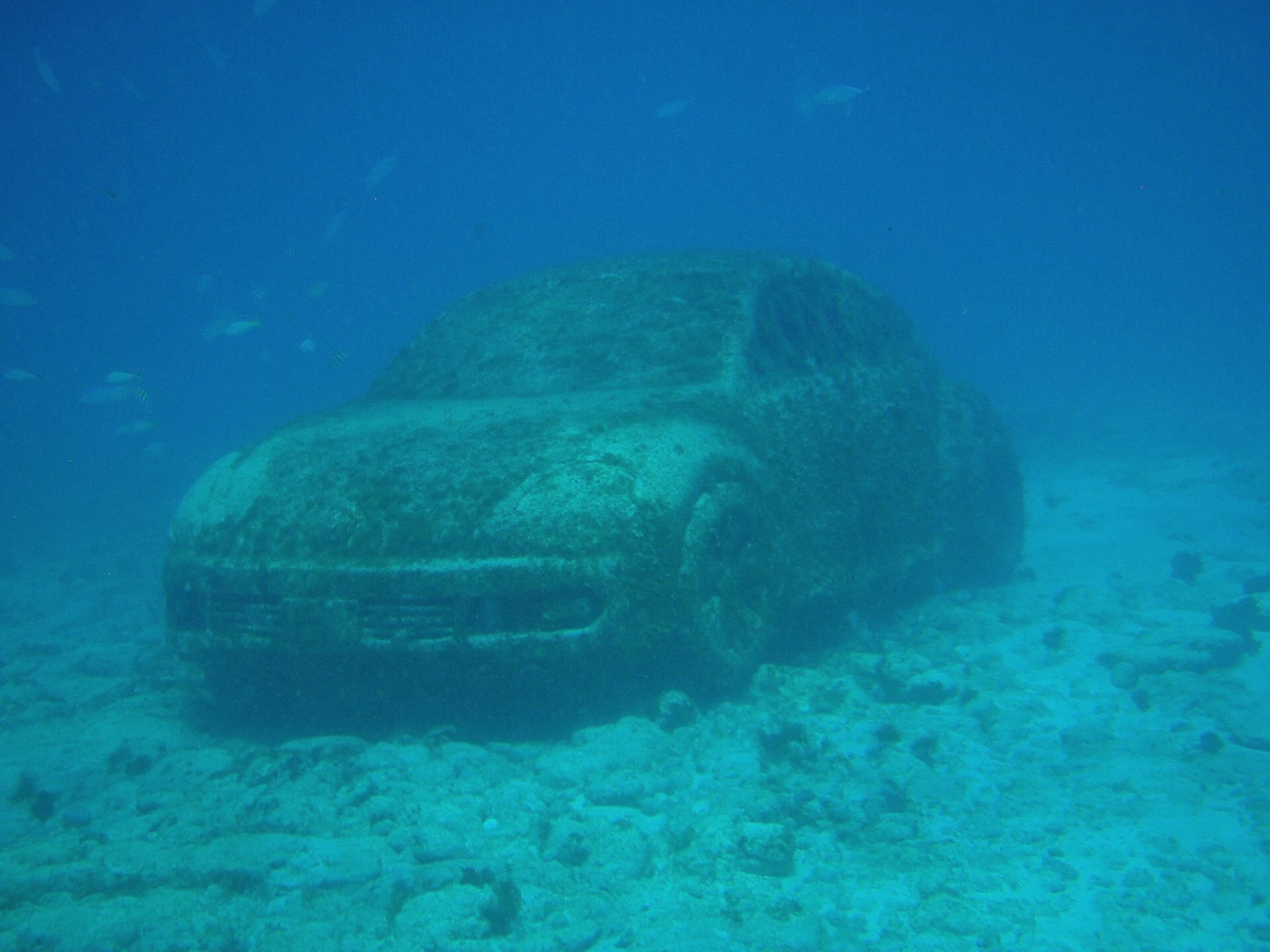
A submerged Volkswagen sculpture at MUSA. Photo: Andy Blackledge from Scottsdale, AZ, USA (CC BY 2.0) via Wikimedia Commons
Getting to the Boat
The museum-first trip changed its starting point, and this is the most practical thing on the page. It now departs from the island, not the mainland. You meet at Senor Frog's in central Isla Mujeres and walk a short distance to the boat.
That means one of two plans. The first is the passenger ferry from Puerto Juarez, at the northern end of Cancun, which crosses to Isla Mujeres on a regular schedule through the day. Build in buffer time so you reach the meeting point with room to spare, and remember you will need the ferry back as well. The second is simpler: pair the snorkel with an island day. The catamaran trips in our comparison make the crossing for $35 on the shared tier, and plenty of visitors ride over in the morning, snorkel the three spots, then spend the rest of the day on Playa Norte before riding back. The listing offers free cancellation up to 24 hours ahead and Reserve Now and Pay Later, so you can hold a place before your ferry plans are fixed.
If you are based in the Hotel Zone and a ferry crossing does not appeal, the five-stop run at $99 departs from an office there and reaches the same galleries as one of its five stops. Reviewers report included pickup and return, so confirm that at booking rather than assuming it. It is the only bookable route on this page that puts a snorkeler on the statues without setting foot on Isla Mujeres first.
For everything else the island offers around your boat time, the Isla Mujeres crossing guide covers the bay the museum sits in.
What You Will See in the Water
The snorkel galleries give you human figures at repose, clustered groupings, and single installations that have become artificial reefs in their own right. The statues were cast from marine-friendly material, with holes built in so larvae and small creatures can settle inside them. Over time the surfaces take on algae and encrusting coral, and fish adopt the structures as shelter. That is the spectacle: sculpture and reef merging.
On the three-spot run you get context the museum-only visits cannot offer. El Farito, the lighthouse reef, is a shallow, fishy stretch of coral that warms you up. Manchones reef, which the statues sit in, adds living coral and the usual Caribbean reef fish to the mix. Then the galleries themselves. Reading the three in sequence is the point. You see what a natural reef looks like, then you see sculpture doing the same job from scratch.
Photographs from the museum, many freely licensed and taken by visiting divers and snorkelers, show what the water is like on a good day. Figures read clearly from a few metres. Schools of small fish move through and around the groupings. The Volkswagen and the crowd of standing figures are among the pieces that have become recognisable through those photos.
Manage your expectations in one direction only: from the surface, you are looking down through a few metres of water. Colours mute with depth, so reds and warm tones fall away first. A mask with a fresh strap and a defogged lens matters more here than a new camera. Ask your guide before the water how the group will be run, because the certified bilingual guides on the museum-first trip brief the route and the rules before anyone gets wet.
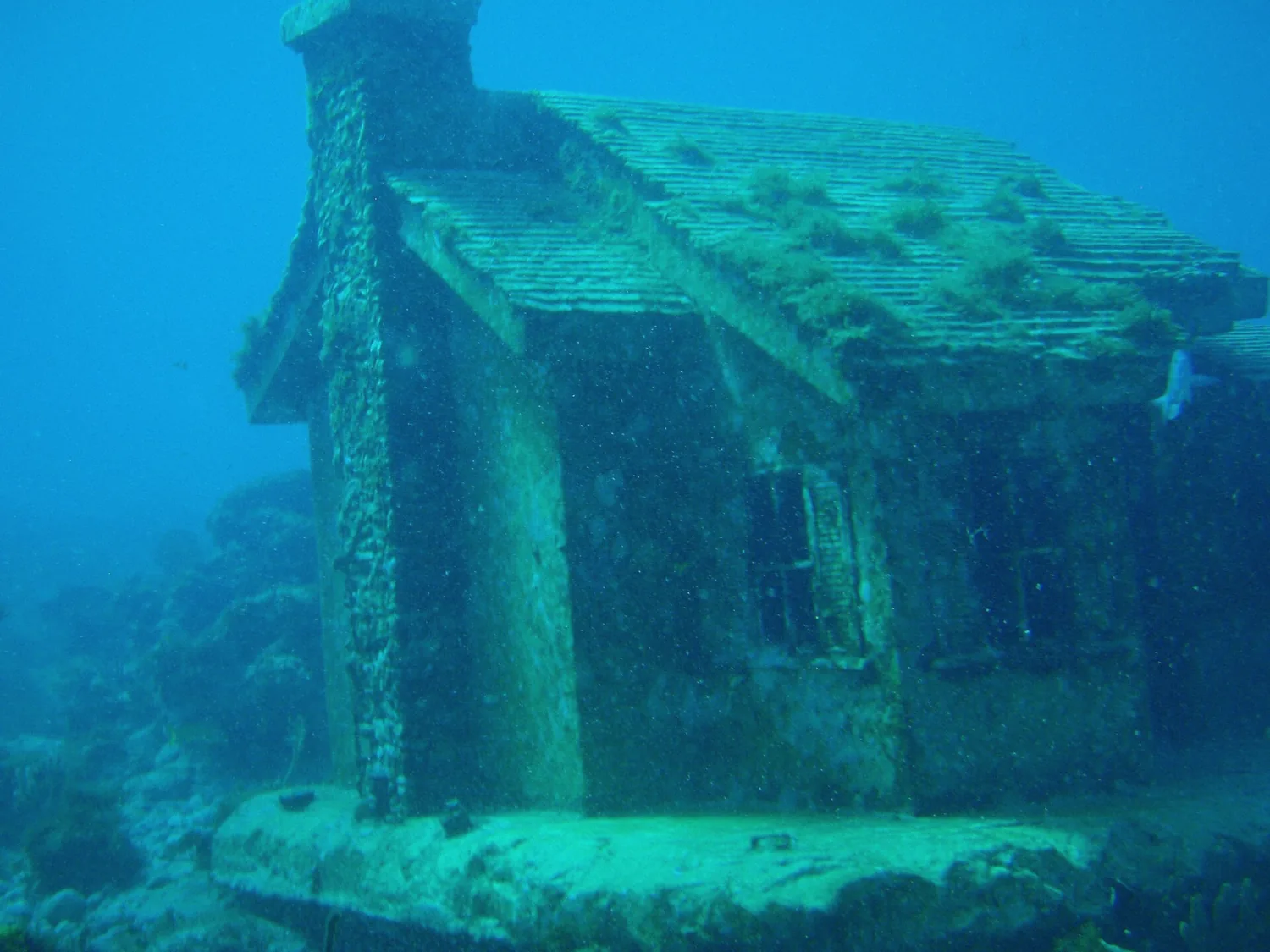
The Urban Reef grouping at MUSA. Photo: Andy Blackledge from Scottsdale, AZ, USA (CC BY 2.0) via Wikimedia Commons
The Rules: Sunscreen, Park Fees and Touching Nothing
MUSA sits in water that is national park territory, administered by CONANP, Mexico's national protected areas commission. That status has practical consequences for your visit, and they are enforced at the boat, not printed politely on a sign nobody reads.
Sunscreen is banned outright before entering the water on the museum-first trip, with no carve-out for formulas marketed as reef safe. Residues wash off in the first minutes of a swim and stress coral and the young life colonising the statues. The practical answer is a rashguard or a long-sleeve shirt for sun protection. Wear the shirt, skip the lotion.
Touching the statues and marine life is off-limits across these waters. The sculptures are living reef structure now. A hand on a colonised surface can kill what took years to grow. Guides brief this before anyone enters the water.
Park money is handled differently on each route. The museum-first trip states plainly that marine park taxes and entrance fees are included in its $70 price, with no hidden charges, which removes the classic pier surprise. Other listings in the comparison are less explicit about park fees for the MUSA stretch itself, so ask at booking what is included rather than discovering it at the dock.
The museum-first listing also notes that it is not suitable for travellers with back, heart or respiratory conditions, or those who have had recent surgery. These are open-water activities with ladder entries and surface swimming. Read the difficulty notes before you commit.
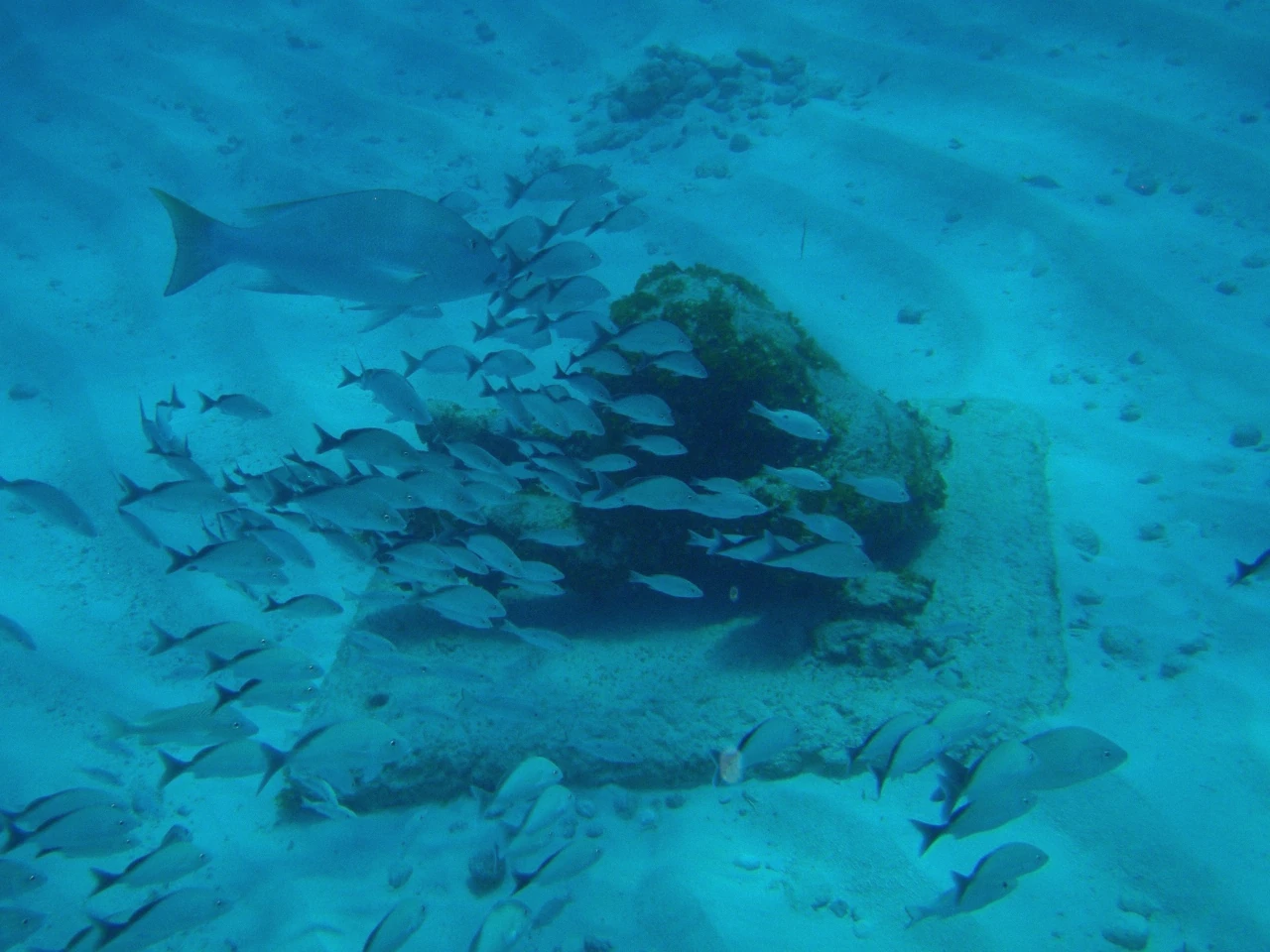
The Disgraced Politicians installation at MUSA. Photo: Andy Blackledge from Scottsdale, AZ, USA (CC BY 2.0) via Wikimedia Commons
Practical Details: Timing, Fitness and Booking
The museum-first trip runs 3 hours 30 minutes on the water and meets at Senor Frog's in central Isla Mujeres, a short walk to the boat. Book ahead, and remember to plan the ferry around the start time if you are coming from Cancun. Free cancellation applies up to 24 hours in advance, and Reserve Now and Pay Later lets you hold a place without paying immediately, which is useful while your crossing plans settle.
The five-stop run starts at the operator's office in the Hotel Zone and is back about three hours after departure. The listing itself does not state hotel pickup, but recent reviewers report included pickup and return, so confirm at booking rather than assuming either way.
Both crossings are by boat, so if you are prone to seasickness, take your precautions before boarding rather than after. Morning water in this region tends to be calmer than afternoon water.
Both trips include gear and a briefing. Neither lists lunch, so plan a meal around the water time. On the island that is easy, because you are steps from the town's restaurants before and after. The museum-first listing rules out travellers with back, heart or respiratory conditions and recent surgery, and both routes require basic comfort swimming in open water. If anyone in your group cannot swim, neither of these is the right trip, and you should look at boat formats where swimming is optional rather than central, or read the Cancun snorkeling tours compared side by side to see how the full-day and land-based options differ.
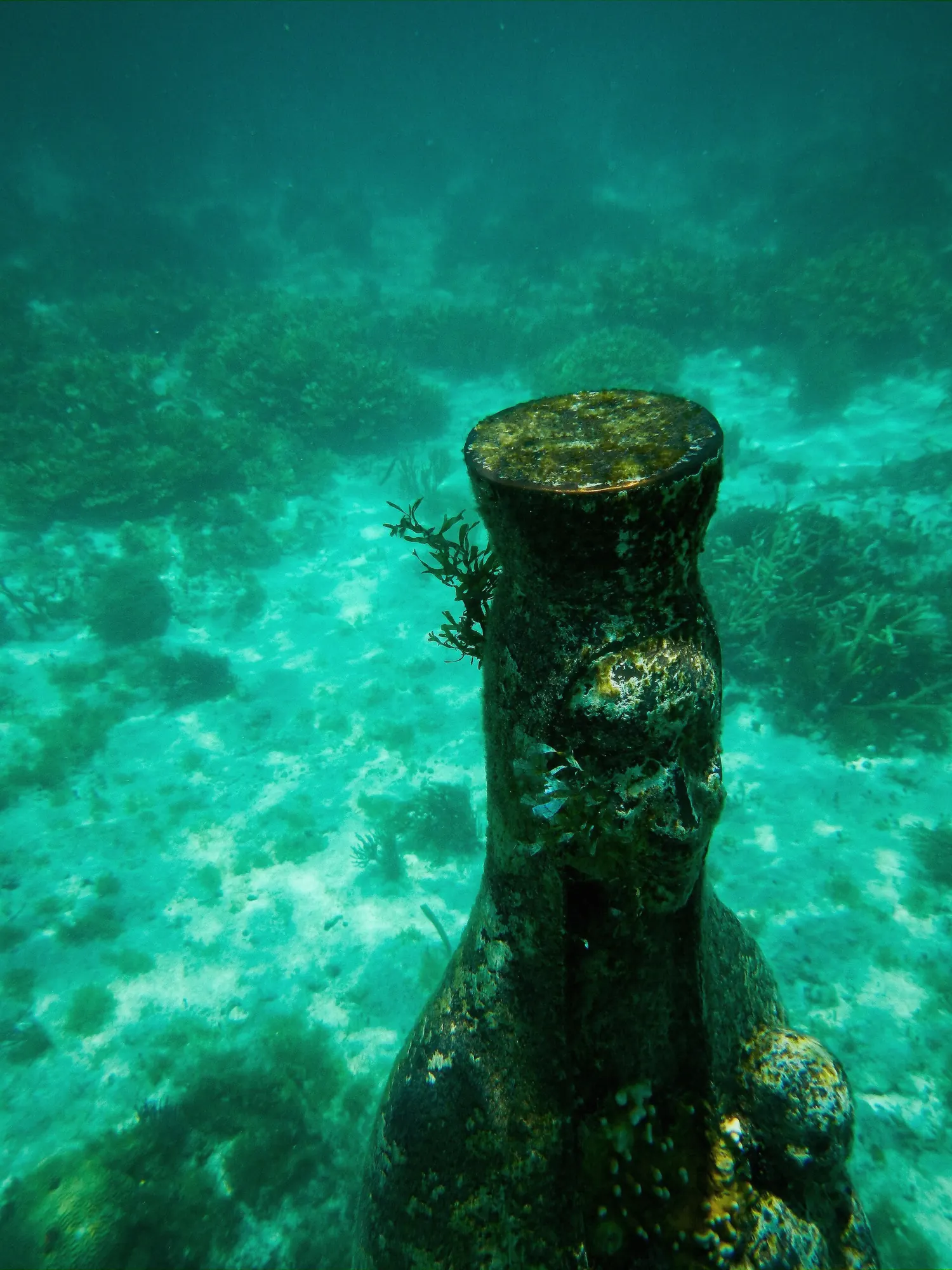
Sculptures on the bottom at Manchones. Photo: allenran 917 from Tampa, USA (CC BY 2.0) via Wikimedia Commons
The Honest Trade-Offs Before You Book
We compare these listings for a living, so here is the unvarnished read.
The $70 three-spot trip is the cheapest way onto the statues and the only trip that pairs the museum with two genuine reef swims in one booking. An hour at each spot is a generous rhythm, the park fees are already inside the ticket, the guides are certified and bilingual, and there is a private option. The honest cost is logistics. You have to get to Isla Mujeres, which means a ferry in each direction or restructuring your day around the island. For many travellers that is a bonus. For a family with a tight Hotel Zone schedule, it is friction.
The $99 five-stop run wins on convenience if you are staying in the Hotel Zone. You trade some museum focus for a turtle, a wreck, a cenote and a mainland reef, with pickup reported by reviewers. Both trips carry a 4.6 rating, so neither has an evidence edge on the water. The difference is route, starting point and how much of the day belongs to the statues.
What no snorkel trip gives you at MUSA is the deep galleries. If the museum's full collection is your goal, diving reaches what the surface cannot, and no snorkel listing in our comparison changes that.
A note on alternatives. The $35 Isla Mujeres catamaran passes these waters and offers a reef stop, but it is an island day, not a museum visit. The Punta Nizuc speedboat trip at $51 reaches a different marine park on the reef's edge, not the MUSA galleries. The jet ski and reef run at $70 and the Puerto Morelos trip at $29 do not reach the museum either. If the statues are why you came, book one of the two formats that actually stop there.
When the museum-first trip is the wrong choice
Be candid with yourself about the ferry. If you have young children, an early flight the next day, or a group that struggles with connections, the added crossings can turn a good morning into a rushed one. In that case the Hotel Zone departure of the Reef & MUSA boat snorkel is the pragmatic answer.
If instead you have a spare day, the three-spot run combines naturally with an island day, and the $70 ticket against 3 hours 30 minutes of water time across three spots is the best value on the museum in the comparison.
What the Day Really Costs Beyond the Ticket
Ticket prices are the start, not the end. Here is every figure the listings state, so you can budget without surprises.
On the museum-first $70 trip, marine park taxes and entrance fees are included, so the ticket is the number. Full snorkeling gear and bottled water are in the price. What sits outside it is the ferry from Puerto Juarez and any food on the island, since lunch is not listed. The private group option costs extra at a rate the public listing does not state, so ask when you enquire. Free cancellation up to 24 hours ahead protects the ticket if weather or the ferry timetable turns against you.
On the $99 five-stop run, gear is included and lunch is not, so plan a meal before or after. No additional fees are stated on the listing for MUSA itself, which is not the same as saying none exists on the day, and it is one more reason to confirm inclusions at booking.
For contrast, other reef trips in the comparison handle park money visibly: the Puerto Morelos run sits at $29 with a beach club lunch built into its four hours, the Tulum day at $83 covers ruins, a cenote and turtles across ten hours, and the private half-day catamaran is $1,750 per group. The pattern is clear: ask what is included, because the pier is where unstated fees surface.
Tips for guides are customary on these boats. Bring small bills. A dry bag or the boat's storage keeps your phone safe while you swim.
Where to Go Next
Where to go next on this site
From here, book the water: the three-spot MUSA snorkel is the museum-first run this page details, the five-stop boat tour adds the statues to a longer circuit from the Hotel Zone, and the Isla Mujeres crossing guide covers the ferry and the bay the museum sits in.
MUSA Snorkeling Questions
Why does the MUSA snorkel leave from Isla Mujeres and how do I get there?
The museum-first trip meets at Senor Frog's in central Isla Mujeres and walks a short distance to the boat. From Cancun you take the passenger ferry from Puerto Juarez, or you build the snorkel into an island day and cross in the morning. If a ferry crossing does not suit your plans, the $99 five-stop run departs from the Hotel Zone and reaches the same galleries as one of its stops.
Are park entrance fees included in the MUSA snorkel price?
On the three-spot trip, yes. The listing states that marine park taxes and entrance fees are included in the $70 price with no hidden charges, so you pay nothing at the pier. On the five-stop run the listing does not state park fees either way, so confirm what is included at booking before you pay.
How much time do you spend in the water at the MUSA statues?
The museum-first trip is built around three stops of about an hour of guided swimming each: El Farito, Manchones reef and the museum galleries. That means roughly a third of the total water time belongs to the statues, with the two reef stops framing them. The five-stop run spends less time at the museum because MUSA is one of five stops in three hours.
Is there a private option for the MUSA snorkel tour?
The museum-first three-spot trip offers a private group option, so your party can take the boat without other guests. The listing does not state the private rate, so ask when booking. Free cancellation up to 24 hours ahead and Reserve Now and Pay Later apply, which makes it easier to hold a private slot while you finalise the group.
Who made the MUSA statues and what are they made of?
The sculptures are the work of Jason deCaires Taylor and Mexican artists. They were cast from marine-friendly material with holes built into the pieces so larvae and small marine creatures can settle inside them. Over time algae, encrusting coral and resident fish colonise the surfaces, which is the whole point: the museum functions as an artificial reef that draws visitors away from the natural reefs.
What happens if the sea is too rough on the day of my MUSA snorkel?
The museum-first trip offers free cancellation up to 24 hours in advance, and Reserve Now and Pay Later means you have not paid until you go. If weather looks wrong, cancel inside the window or shift your ferry plans at no cost. Neither listing states a specific wave-height threshold, so the operator's call on the day governs, and morning water in this region tends to be calmer than afternoon water.