 Cancun Mexico Snorkeling
Whale Shark Snorkeling Cancun: Season, Rules, Prices and How It Works
Whale shark snorkeling: Cancun hosts it for five months a year, no more. The fish aggregate north of Isla Mujeres from late May to mid-September, and the boats stop when they leave. This guide covers the season, the rules, the money and the honest alternative for the rest of the year, starting from the Cancun snorkeling trip price comparison.
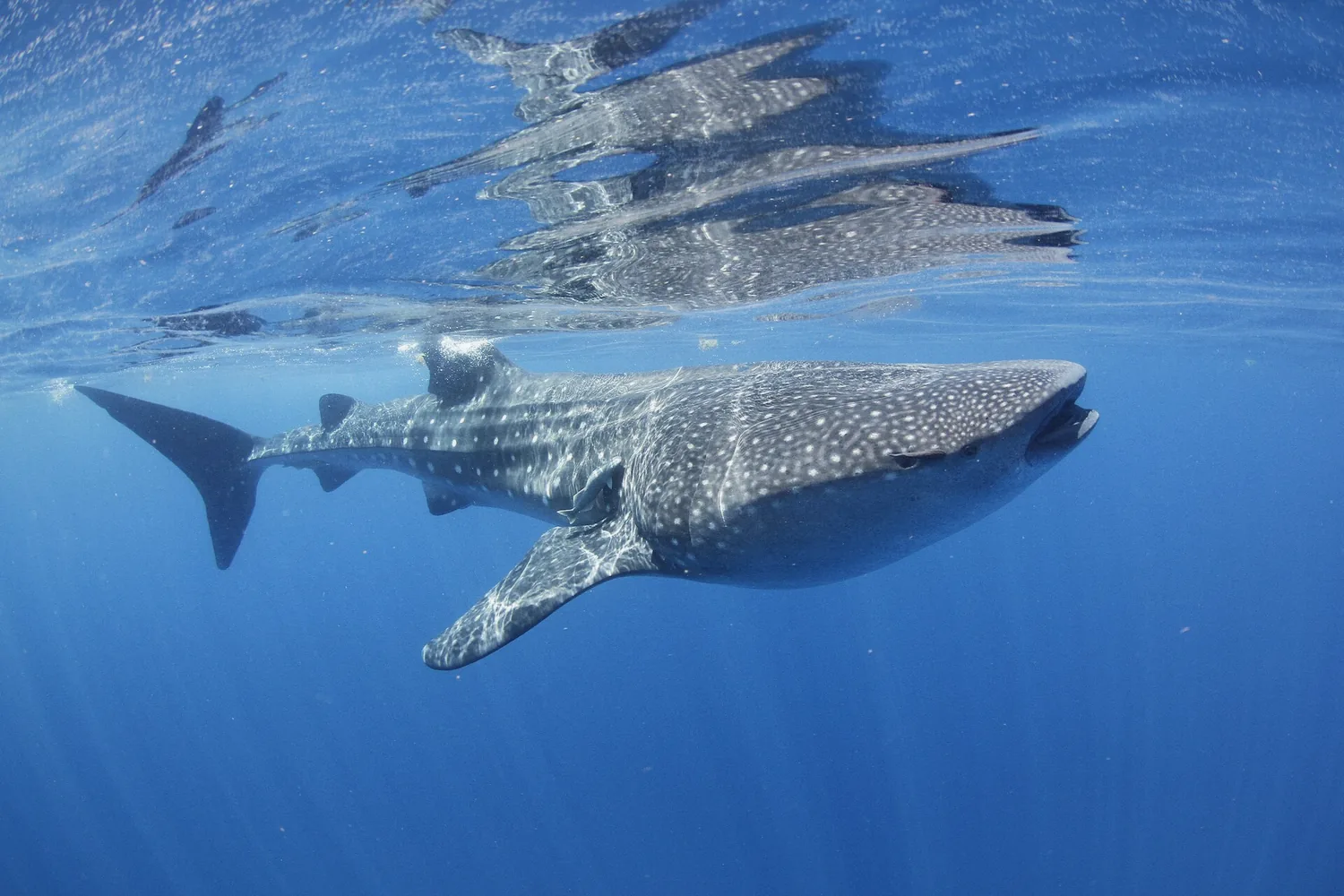
A whale shark feeding at the surface north of Isla Mujeres. Photo: MarAlliance2018 (CC BY-SA 4.0) via Wikimedia Commons
Quick answer Season runs late May to mid-September, swims are snorkel-only, listings typically cost $120-160.
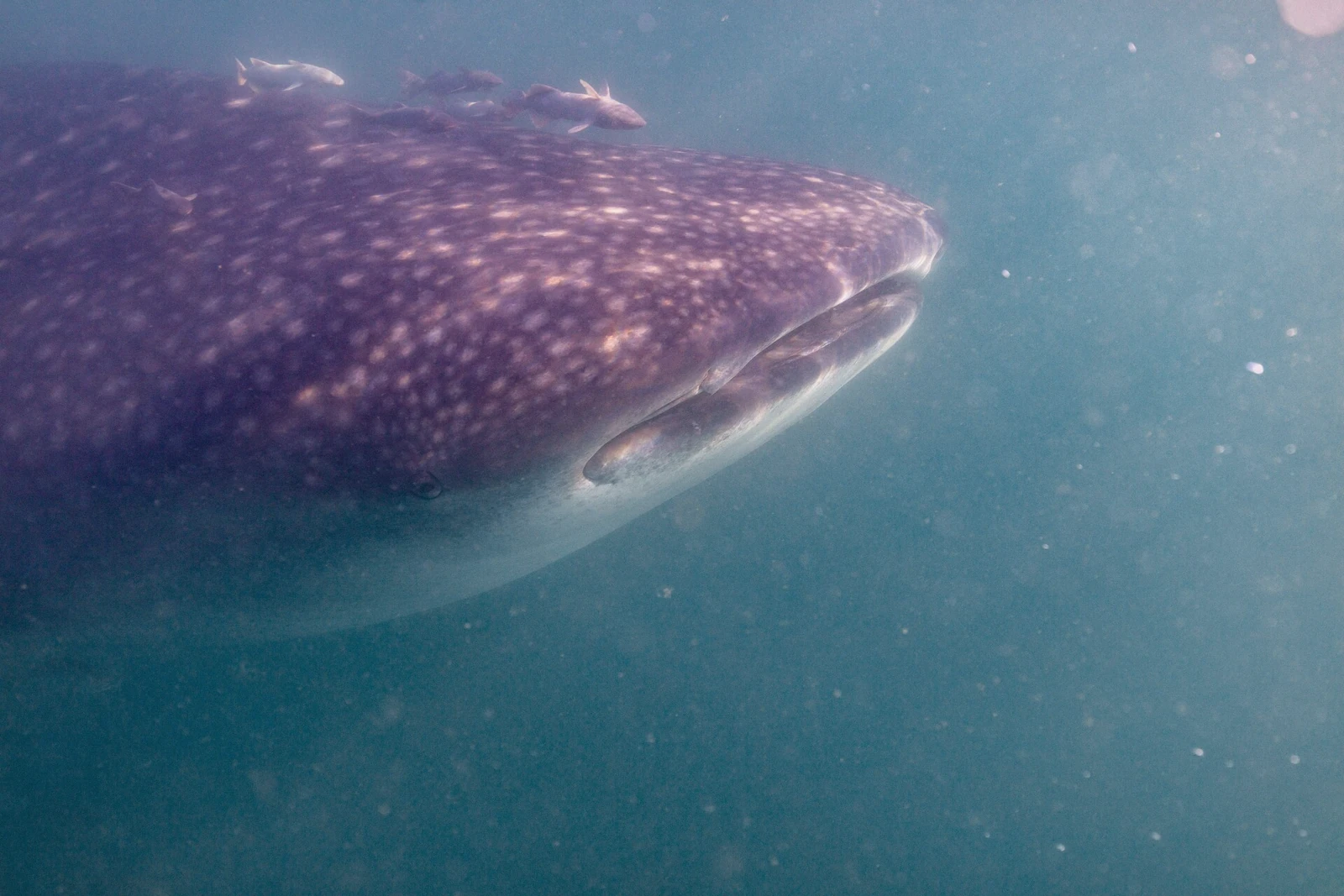
Whale shark snorkeling near Cancun runs roughly late May to mid-September, when whale sharks aggregate north of Isla Mujeres and off Contoy to feed on bonito spawn at the surface. It is snorkeling only: no tanks, two swimmers plus a guide at a time, no touching, a set time in the water then a rotation. Boats leave from Punta Sam and Isla Mujeres and take 30 to 90 minutes to reach the grounds. Typical all-in listings run $120-160 per person with gear, guide, lunch and transfer. The 2026 season window closed in mid-September and boats re-launch late May. No whale shark tour is sold in this site's catalog.
Key takeaways
- The window is short. Outside late May to mid-September there is no whale shark snorkeling from Cancun at all.
- When the season is shut, the reef trips are the snorkeling on offer. The highest-rated is the Reef & MUSA boat snorkel at $99 for three hours and five stops.
- We compare every Cancun trip in the catalog on price, reviews and inclusions so you can book with the facts.
- Pair the timing with the water: the snorkeling spots guide maps every reef a Cancun trip can reach.
What whale shark snorkeling near Cancun actually is
A whale shark day from Cancun is not a reef trip with a big animal thrown in. It is an open-water pelagic encounter. The boats run north, past Isla Mujeres and toward the waters off Contoy, to where whale sharks gather each year to feed on bonito spawn. The fish feed at the surface, which is why this is a snorkeling experience and not a dive. You slip in ahead of a moving shark that can be longer than a small boat, kick to hold position, and watch it feed with its mouth wide open as it sieves the water.
The format is tightly controlled. There are no tanks. Two swimmers plus a guide go in at a time. Touching the animal is forbidden. You get a set time in the water, then you rotate so the next pair goes in. Nobody chases, grabs a fin, or blocks the path of the shark. Operators must be licensed, boats are capped, and marine-park rules apply, because the species is protected in Mexican water.
Logistically, boats leave from Punta Sam on the mainland and from Isla Mujeres itself. The ride to the grounds takes 30 to 90 minutes depending on where the aggregation sits on the day. These are open Caribbean waters, not the sheltered shallows of the Hotel Zone reef shelf, and that single fact shapes everything else about the day: the early start, the seasickness risk, and the flat-water preference for the morning runs.
It is also worth being clear about what you are buying. No operator can guarantee a shark, though in season the aggregation is reliable enough that a blank day is rare. What the good listings sell is a licensed boat, a trained guide in the water with you, and the discipline to follow the rules. That is the product. The fish shows up on its own terms.
The season: late May to mid-September, and it closes hard
This is the headline fact and the one that sinks more plans than any other. Whale sharks aggregate north of Isla Mujeres and off Contoy roughly from late May to mid-September, drawn by bonito spawn at the surface. When the spawn ends, the fish disperse and the boats stop running. There is no shoulder season and no bad-weather workaround.
The 2026 season window closed in mid-September. Boats re-launch late May. Between those two points, whale shark snorkeling from Cancun simply does not exist. Nobody sells it, because there is nothing to sell. If a listing or a street vendor offers you whale sharks out of season, that is a red flag about the operator generally.
Two practical notes follow from the short window. First, demand concentrates. June through August are the peak months, and the days around Mexican holidays and summer school breaks fill fastest, so book early rather than hoping for a dockside deal. Second, plan your whole trip around the window, not around the whale shark day alone. If you land in October, build the itinerary around the reef instead. The catalog's strongest all-round trip, the Reef & MUSA boat snorkel, runs year-round and packs five stops into three hours, including the MUSA underwater museum, a resident turtle spot, a shipwreck and an underwater cenote.
If you are traveling at the very edges of the season, understand that nature sets the calendar. A late-May departure depends on the fish having arrived. An early-September one depends on them still being there. Operators watch the grounds daily and will move or cancel when the aggregation is not holding, which is one more reason free cancellation matters. Most listings in the catalog, across every category, carry free cancellation up to 24 hours in advance for a full refund, and whale shark listings follow the same convention, though individual terms vary and the listing is the binding text. If you are reading this between October and May, the honest answer is that the season has not started or has already closed - book the reef tours in this catalog instead.
A lone whale shark off Isla Mujeres early in the season. Photo: Bernard DUPONT (CC BY-SA 2.0) via Wikimedia Commons
How the day works, hour by hour
Whale shark days start early. The classic shape of the day is a hotel pickup before dawn, a briefing at the dock, and a departure from Punta Sam or Isla Mujeres while the sea is at its flattest. The crossing to the grounds takes 30 to 90 minutes depending on where the aggregation is feeding that day. Guides spot from the flybridge, looking for surface feeding and the crowds of birds that follow the spawn.
Once the boat is on the grounds, the rules engine starts. The captain positions ahead of a feeding shark without cutting its path. Two swimmers plus a guide enter. No tanks, no diving down, no touching. You get a set window in the water, then you rotate out and the next pair goes in. Most days allow several rotations per guest. The snorkel stays at the surface because the fish does. If it sounds repetitive, it is, deliberately. The routine is what keeps the encounter safe for both sides.
Lunch is usually aboard between rotations, and the standard all-in listing includes gear, guide, lunch and transfer, which is why the typical $120-160 price looks higher than a two-hour reef snorkel. The transfer matters more than it sounds. Punta Sam is north of the Hotel Zone and the dock briefing starts before the road into Cancun gets busy.
The day ends with the ride home, which can be lumpy in the afternoon, and a return to your hotel by early afternoon. That leaves most of the day free, which surprises people. A whale shark morning is intense and then it is over, which is exactly why many travelers pair it with a reef trip on another day rather than treating it as the whole snorkeling plan.
One warning that deserves its own paragraph: seasickness is the real risk on this trip. Open-water swell is a different animal from the flat water over El Meco or Manchones. If you are prone to motion sickness, medicate well before boarding, because once the boat is moving, it is too late. Morning runs are flatter, which is a second reason to take the earliest departure on offer.
The rules, and why they are strict
The whale shark is protected in Mexican water. That is not a slogan, it is the operating framework. Licensed operators only. Capped boats. Marine-park rules. The encounter format follows directly from that protection.
Here is the full rule set as it applies in the water. Snorkeling only, no tanks and no breath-hold dives toward the animal. Two swimmers plus a guide at a time. No touching the shark. A set time in the water, then rotate. The guide manages the encounter and can end it. On the boat, no sunscreen in most licensed operations, because the residue damages the plankton layer the fish feeds on, which means a rashguard or long-sleeve shirt is your sun protection. The reef tours in the catalog already ban regular sunscreen for the same reason, so it is a local norm, not a whale shark quirk.
These rules are not bureaucracy for its own sake. The aggregation off Isla Mujeres is one of the largest known, and its health depends on the feeding season staying undisturbed. A population that learns to avoid boats loses its feeding ground. Travelers who respect the two-at-a-time and no-touch rules are the reason the experience is still on sale every year. The authority that manages this protection in Mexico is the National Commission of Natural Protected Areas, CONANP, which publishes the regulatory framework for protected marine species.
For you as a booker, the practical takeaway is to choose a licensed operator and follow the brief. If an operator offers tank dives with the sharks, or lets a crowd of a dozen surround one fish, walk away. The listing price on the reputable runs includes the license, the guide in the water and the capped boat. That is part of what the $120-160 buys.
What a whale shark day costs, and how it compares to the reef catalog
Typical whale shark listings from Cancun run $120-160 per person all-in, with gear, guide, lunch and transfer included in that range. The listing you are comparing decides where inside the range a given day sits. Private variants cost more and are not stated here because this site does not list whale shark tours, so it does not quote their specific prices. Anyone selling you a whale shark day well below this range should trigger the same questions as any too-good price: what is missing from the inclusions, and what gets collected at the dock.
For scale, here is the full reef and island catalog this site compares, with prices as listed. The whale shark range sits above every shared reef trip except the private charter, which reflects the fuel, distance and licensing of an open-water day.
| Trip | Price | Duration | Rating | Reviews |
|---|---|---|---|---|
| Reef & MUSA boat snorkel | $99 | 3 hours | 4.6 | 41 |
| MUSA museum snorkel | $70 | 2 hours | 3.5 | 4 |
| Isla Mujeres catamaran | $35 | 8 hours | 4.2 | 3,316 |
| Puerto Morelos reef snorkel | $29 | 2 hours 30 minutes | not stated | not stated |
| Tulum ruins, cenote, turtles | $83 | 10 hours | 4.5 | 370 |
| Speedboat jungle tour | $51 | 3 hours | 4.5 | 183 |
| Private half-day catamaran | $1,750 per group up to 25 | 4 hours | not stated | not stated |
Illustrative photo. A whale shark in open blue water, the view from the surface line. Photo: Adrienne van den Beemt (CC BY 4.0) via Wikimedia Commons
Departure points: Punta Sam and Isla Mujeres
Two departure points serve the grounds. Punta Sam sits on the mainland just north of central Cancun, and it is the standard launch for tours sold in the Hotel Zone and downtown. Isla Mujeres departures suit travelers staying on the island, and they shave the crossing because the island sits closer to the aggregation.
The ride to the grounds takes 30 to 90 minutes. That range is wide because the fish move. Some days they feed close to Isla Mujeres, other days the fleet runs well toward Contoy. Expect the crew to make the call on the day based on where the spotters and the first boats out found feeding activity.
Transfers are standard inclusions on the mainstream listings. The typical $120-160 price band includes the hotel transfer, and it is worth insisting on it, because a pre-dawn taxi across Cancun adds cost and stress to a morning that already starts early. Confirm the pickup time and zone when booking, exactly as you would with the catalog trips that include hotel pickup, like the Puerto Morelos reef & lunch, which collects you anywhere in Cancun.
A word on docks and fees, because the catalog shows the local pattern. Mexican marinas collect port fees, and reef trips collect conservation taxes, sometimes separately at the dock. The Isla Mujeres catamaran, for example, charges a $20 per person port fee at the dock on every tier even though tickets start at $35. The Puerto Morelos lunch trip leaves its $15 reef tax to be paid in cash on the day. Whale shark listings sit somewhere on this spectrum, and the listing is the only reliable source. Read the includes list before you pay, and carry cash for anything the fine print says is collected at the pier.
Outside the season: what to snorkel instead
From mid-September to late May the reef tours are the snorkeling on offer in Cancun, and the honest answer is that they are good enough to plan a trip around. The catalog's strongest listing, the Reef & MUSA boat snorkel, holds a 4.6 rating across 41 verified reviews, the highest in this comparison, and puts five different stops into three hours: El Meco reef, the MUSA statue galleries, a resident turtle spot, a shipwreck on white sand and an underwater cenote. El Meco sits 8 to 12 feet down with little current, which makes it a beginner-friendly shelf.
The three-spot MUSA snorkel is the three-spot alternative at $70. Both immersions go to the more than 470 submerged statues and the Manchones reef around them, with certified bilingual guides in the water and three guide languages on the jet ski run, sailing from the Hotel Zone marina. The jet ski slots cap at six skis with only 4 reviews and a 3.5 average, so read its honest edges before choosing it over the five-stop run.
If your trip is land-based or you want variety, two other formats cover the water well. The speedboat jungle tour at $51 has you drive your own two-person boat through the Nichupte lagoon mangroves, then snorkel an hour in the Punta Nizuc marine park, with the $20 port fee and marine-park tax already in the ticket. The Tulum ruins, cenote, turtles day at $83 adds a guided hour with wild sea turtles at Akumal Bay to the ruins and a cenote swim, with Tulum site fees of $40 per adult collected at boarding rather than in the ticket.
Matching the alternative to your group matters more out of season, because the whale shark day is no longer the anchor. Swimmers who want maximum reef time should take the five-stop run. Families mixed with non-swimmers do better on the Isla Mujeres catamaran, where the sail, open bar and Playa Norte beach club carry the day for $35 plus the $20 dock fee, and the snorkel stop is one item among many. Groups of up to 25 who want the water to themselves get it on the private half-day charter. When the water closes, compare all Cancun snorkeling trips instead: the reef runs all year even when the sharks do not.
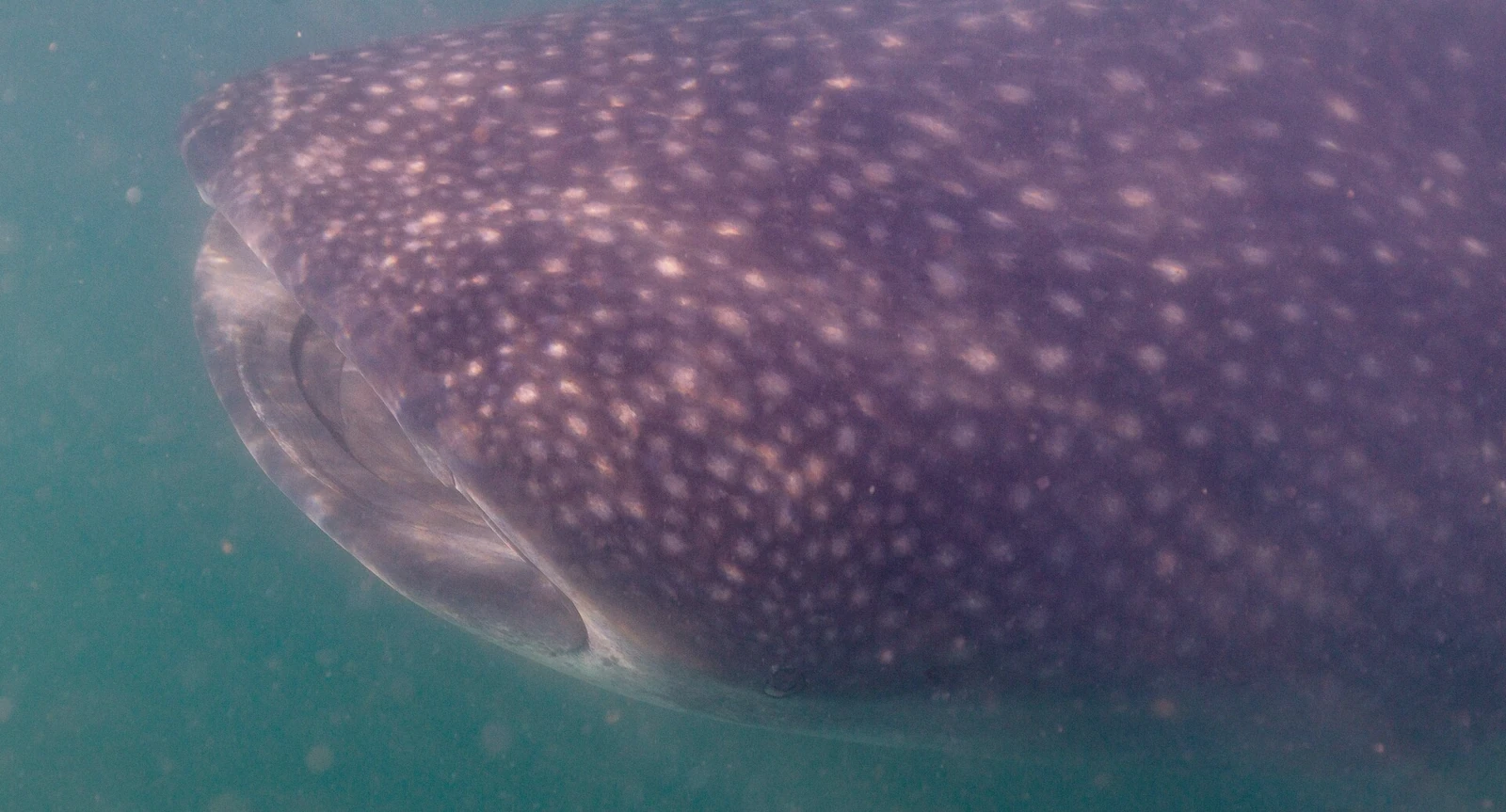
Illustrative photo. A whale shark at the surface, showing the scale swimmers meet. Photo: Diego Delso (CC BY-SA 4.0) via Wikimedia Commons
How to choose a whale shark operator in season
This site does not sell whale shark tours, so this section is a checklist rather than a comparison. Use it against any listing you find elsewhere.
Start with the license. The fish is protected in Mexican water and only licensed operators may run the encounters, with capped boats and marine-park rules. A listing that cannot state its license clearly is not worth the doubt.
Second, check the encounter format in the includes list. The correct format is snorkeling only, two swimmers plus a guide at a time, no touching, set rotation. If a listing promises guaranteed tank dives with the sharks, or unlimited time in the water, it is describing a product that does not comply.
Third, price the full day, not the headline. Typical all-in listings run $120-160 with gear, guide, lunch and transfer. Below that range, expect dock fees, gear rental or transfers to surface as extras. The catalog demonstrates the pattern on the reef side, where a $35 catamaran ticket grows by a $20 dock fee and the Tulum tour collects $40 per adult at boarding.
Fourth, weigh the morning departure. Open-water swell is the real risk, seasickness beats everything else on the complaint list, and morning runs are flatter. The earliest departure is the best one.
Fifth, cancellation. Weather in open water closes boats without much warning, and the aggregation moves. Free cancellation up to 24 hours in advance is the local standard across the catalog, on trips from the $51 jungle tour to the $1,750 private charter, and it is a fair expectation on a whale shark listing too. Reserve-now-pay-later options also exist across the catalog, which helps when booking far ahead for a summer window.
Last, read recent reviews for the two things that only reviewers reveal, the size of the actual swim groups and whether the crew enforces the rules in the water. Ratings alone do not capture either. A 4.6 from 41 reviewers like the catalog's top trip tells you more than a higher score from a thin base, the trap the 3.5-from-4 MUSA listing shows plainly.
Illustrative photo. Feeding at the surface, the exact behavior the Cancun season is built around. Photo: Diego Delso (CC BY-SA 4.0) via Wikimedia Commons
Preparing for the day: gear, health and honesty about conditions
Preparation for a whale shark morning is mostly about the boat, not the water.
Seasickness first, because it is the trip-ruiner. Open-water swell between Cancun and the grounds is nothing like the sheltered reef shelf. Take your usual remedy before boarding, not after you feel it, choose the earliest departure, since morning runs are flatter, and keep your eyes on the horizon during the crossing. The catalog flags the same reality on its own reef trips, where the Puerto Morelos listing warns seasickness-prone travelers away outright.
Pack a rashguard or long-sleeve shirt instead of sunscreen. Sunscreen residue and surface feeding do not mix, and the reef tours in this catalog already ban regular sunscreen as a protection measure, so the habit carries over. Reefsafe does not mean in-the-water here. The shirt, a hat and sunglasses for the crossing cover it.
Bring cash. Docks collect fees, crew tips are customary, and photo packages in this market are often paid on site. The catalog shows how this works locally, from the catamaran's $20 dock fee to the MUSA museum trip charging about $85 per couple for photos and $10 for a wetsuit, all payable to the operator.
On health and suitability, be honest with yourself. This is a swim in open water with a large wild animal, requiring reasonable fitness and comfort away from the boat. Several catalog trips publish hard suitability rules, the MUSA museum snorkel spends three hours in open water and suits confident swimmers and excludes pregnancy and respiratory conditions, and a whale shark day should be treated as at least as demanding. If anyone in your group is not a confident swimmer, the Isla Mujeres catamaran is the day that still delivers the water without demanding it.
Finally, manage expectations and time. The crossing is 30 to 90 minutes, the rotations are short, and the fish is wild. Go for the encounter, not a photo trophy, take the earliest boat, and book the rest of your snorkeling around the reef. Cancun's year-round water is the reason most travelers come, and the whale shark, in its short window, is the extraordinary bonus on top.
Where to Go Next
Where to go next on this site
When the season closes or the swell rises, the reef catalog keeps working: the five-stop boat tour and the Isla Mujeres catamaran cover the same water the sharks feed over, and the spot guide maps every reef alternative.
Whale Shark Snorkeling Near Cancun: Questions
Can you scuba dive with whale sharks near Cancun?
No. The encounter format is snorkeling only, no tanks, because the sharks feed at the surface and the rules protect that behavior. Two swimmers plus a guide enter at a time, touching is forbidden, and each pair rotates out after a set time. An operator offering tank dives with the sharks is not running a compliant trip.
Where exactly do the boats find the whale sharks?
The aggregation forms north of Isla Mujeres and off Contoy, where the sharks feed on bonito spawn at the surface. Boats leave from Punta Sam on the mainland and from Isla Mujeres, and the crossing to the grounds runs 30 to 90 minutes depending on where the fish are feeding that day.
What does a whale shark tour from Cancun cost, and what is included?
Typical listings run $120-160 per person all-in, with gear, guide, lunch and hotel transfer inside that range. Specific whale shark prices are not stated on this site because the catalog does not sell whale shark tours. Read each includes list closely, since dock fees and photo packages are often collected separately, a pattern visible across the reef catalog too.
Is there any way to see whale sharks outside the season?
Not from Cancun. The window is roughly late May to mid-September, the 2026 season closed in mid-September, and boats re-launch late May. Outside the window the reef tours are the snorkeling on offer, led by the five-stop Reef & MUSA boat snorkel at $99 with the comparison's highest rating, 4.6 across 41 reviews.
How many people swim with one whale shark at a time?
Two swimmers plus a guide, no more. After a set time in the water the pair rotates out and the next two go in. Boats themselves are capped under the marine-park rules, and licensed operators are the only ones allowed to run the encounters at all, because the species is protected in Mexican water.
What should I do about seasickness on a whale shark trip?
Treat it as the main risk of the day. The crossing is open water with real swell, unlike the sheltered reef shelf. Take your remedy before boarding, take the earliest departure because morning runs are flatter, and watch the horizon during the ride. Seasickness, not the sharks, is what most often ruins the trip.